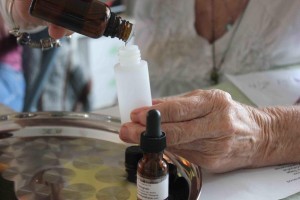
I’ve been an aromatherapy educator since the early 1970s. Since then, the field has undergone many changes. With the introduction of the Internet and multi-level-marketing companies, I’ve seen both good and bad information circulate rapidly.
There’s a lot of potential for misunderstanding when it comes to the power of natural essential oils. This makes quality aromatherapy education more important than ever.
If you’re interested in teaching aromatherapy, here are some tips from a vintage educator.
5 Tips for Becoming an Aromatherapy Educator
1. Know your subject. Study with as many teachers as you can. Absorb different styles, viewpoints, and experiences. Always examine information with a critical eye. Consider the sources and never hesitate to do your own research. As an aromatherapy educator, I work to provide useful, factual, and cited information. But I never mind if a student has questions or does research on their own. In fact, knowing which questions to ask during a live class can provide you with a better education.
2. Apprentice with established institutes. Instead of trying to start from scratch, look for apprenticeships or positions with established teachers. For instance, we sometimes call on our own students to teach in their areas to increase our educational reach. As these student-teachers improve, they feel more comfortable teaching larger classes and mentoring home-study students. Begin as an apprentice or teaching assistant and work your way up. This can be a great way to establish yourself as an aromatherapy educator.
3. Get comfortable with teaching. Students can often teach you just as much as other educators. Knowing the subject is one thing, but thinking on your feet when students ask unexpected questions is another. Being comfortable in front of a group of people is a skill that needs honing. Teaching can help you discover your own unique educational style.
4. Know how to relax. Being an educator, especially in an unregulated and relatively new field, can be as stressful as it is rewarding. I rely on morning walks, meditation, gardening, or being in nature to relax, center, and energize me. I keep my office and therapy rooms scented with my standby Rosemary and Geranium. I’ve used this aromatherapy blend for 30 years, and it still feels like home to me. Know how to establish a relaxing space and find activities that will help relieve the pressure. Trust me—you’ll need these skills!
5: And remember: teaching is learning. Have a wonderful journey, and enjoy it!
Author
SYLLA SHEPPARD-HANGER
Founder & Former Director Atlantic Institute of Aromatherapy
Vetiver is one of our favorite essential oils. (We’ve used it in a number of our Recipes and Blending Guides in the Atlantic Aromatic Library.) In a blend, it offers a deep, rich, earthy tone. Therapeutically, it also has great anti-inflammatory and grounding properties.
It’s always an incredible experience to get to know the plants of the oils we love so dear. Being a member of the Grass Family, Vetiver is pretty easy to grow here in Florida, so I have enjoyed growing it, harvesting it, and sharing it with friends!
My first harvest was a couple of years ago, yielding one little ball, which we gave to Timothy Miller when we met him for lunch in January of 2017. We told him it was to help bring him back to Florida soon, and it worked! He ended up teaching a class here that October.
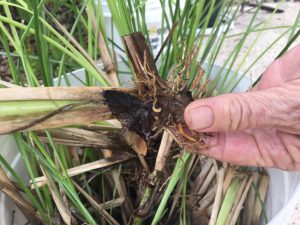
I replanted the stalks from that harvest, and they produced three giant plants, so I began digging up around them. I’ve seen videos of a much larger Vetiver production, where they used a tractor to chain off a 10-foot wide plant and lift it after a six-foot hole had been dug around the roots. My smaller, three-foot plants were difficult enough. Next time, I'm putting the roots in a pipe, so that I can retrieve the roots more easily.
My friend Rehne in LA got me started on growing Vetiver by sending me some of my first stalks. Rehne plants her Vetiver in a 12-inch corrugated pipe that’s been cut and put back together—placing it partially in the ground. With this method, harvest is easy. Pull out the pipe, open it, and voila!
Where are those pipes when I need them? At least I know now and will try that this year.
Now, harvesting is quite the experience. The smell of the Vetiver is instant—as soon as the shovel hits the soil. The sound of breaking roots was inevitable, and as I dug deeper, the roots revealed themselves.
Once the roots are washed, they are white and plump, and they smell of earth. This smell permeated my porch for the next week.
Once I trimmed off their leaves, I cut the roots off. Then I began to separate them into stems with a bit of root for replanting. Once the roots were free, they got several soakings, power squirts, and more soaking to clean them of dirt. Drying overnight, they easily dropped the dry sand the more I cleaned the stalks. I separated the rootless and now they’re ready to replant—this time in pipes. It was a messy job separating the stalks; once done, I gave the roots a final trim and collected a few small pieces that I could use for incense!
I made one ball for a friend, a tradition we started with the first harvest last year. Tried to do another, but I may end up weaving these fibers to make a fragrant basket! Perhaps with a bit of Lavender?
https://www.youtube.com/watch?v=z5Nw83dJEw4
Sylla's Vetiver Planting Tips:
To facilitate harvesting vetiver roots, Sylla recommends planting individual vetiver stems in sections of black corrugated plastic drain pipe.
Planting Instructions:
After harvesting roots, trim the leaves and separate vetiver into individual stems, ensuring each has some root remaining.
Cut black corrugated plastic drain pipe into 12-inch (or longer if desired) sections.
Dig a hole and place a pipe section vertically in the ground, with approximately half below and half above the surface.
Fill the bottom half of the pipe with soil, level with the surrounding ground.
Plant the vetiver in the top few inches of soil within the pipe.
Allow the vetiver to grow for one to two years, depending on your climate.
Harvesting:
Once mature, easily pull the pipe from the ground.
Cut down the side of the plastic pipe to access and harvest the vetiver roots. NOTE: The cut pipe can be reused when replanting.
Rose was one of the first essential oils that Sylla worked with in her aromatherapy practice. It is also one that holds deep emotional resonance for her, as it was a source of comfort during a time of grieving.
Therapeutically, Rose is an oil that can be good for practically everything. It can be helpful for skin-care blends, balancing hormones, cardiovascular issues, stress, migraines, emotional disorders, and much more.
Rose is just one of the oils featured in the Atlantic Aromatic Library. Here, we’ve included a sneak peek, so you can get a sense of what it has to offer.
In this video, you will learn:
The difference between Rose Otto and Rose absolute.
How chemistry affects the oil.
How Sylla used Rose to treat emotional issues.
Why it’s good to vary oils during difficult times.
Below, we’ve also included an abbreviated profile of Rose (full video and profile available in the Atlantic Aromatic Library).
Rose Exploration
Common name: Rose Botanical name: Rosa damascena
Part of the Rosaceae family, there are many variations of Rosa damascena. The biggest areas of production are Bulgaria and Turkey, and other names for it include Summer Rose, Bulgarian Rose, Turkish Rose, Otto of Rose, and Attar. Rose Otto is the oil, while the absolute is a thicker, richer-smelling extract. When you hear the name Rose Otto, you’ll know it’s the essential oil.
Rosa centifolia is another species that produces a much lighter oil. It comes from many different places. In the video, you'll see that Sylla’s sample is from Russia.
In the Otto, stearoptene levels are up to 22%. These constituents are the more solid parts of the oil, which can cause the Otto to solidify at about room temperature. There are also monoterpenols in the Otto, along with geraniol and citronellol—up to 45%. The percent of phenylethyl alcohol is not as high in the Otto as it is in the absolute. The phenylethyl alcohol, or PEA, is what produces that very rosy, floral scent. A lot of people prefer the absolute for this reason.
Drawing these samples up in the pipette, you can see the beautiful color of the Damask Rose. It is clear, which is very similar to Rosa centifolia. The absolute is a little thicker, darker, and richer. More color may come through with the absolute because it's solvent-extracted. Try blending the two together to get the best of both.
Now, we'd love to know:
Do you have a preference for steam-distilled Rose or the Rose Absolute? Why?
What are your favorite ways to use Rose?
Leave us a comment with your answers and let's keep this conversation going!
You can enjoy this video and profile in full by joining us in the Atlantic Aromatic Library. Claim your seat now, and get ready to begin your learning journey with a collection of meditations, lessons, recipes, interviews, and more.
This book, and a particular poem in it, became a pivotal part of my healing. Here is the poem:
I will not die an unlived life
I will not live in fear
of falling or catching fire.
I choose to inhabit my days,
to allow my living to open me,
to make me less afraid,
more accessible,
to loosen my heart
until it becomes a wing,
a torch, a promise.
I choose to risk my significance;
to live so that which came to me as seed
goes to the next as blossom
and that which came to me as blossom,
goes on as fruit.
This was almost 20 years ago. These days, I’m at the point where I’ve almost forgotten that time. I consider myself a thriver, not survivor. I had the best kind of cancer—not enough to kill me but enough to change my life. Now at age 68, I have been, done, seen, and learned so much more since then.
Life is so short, and I’m certainly not finished! I’ve packed a lot into my aromatic journey years, and there’s a lot I feel compelled to share (for historical interest if nothing else).
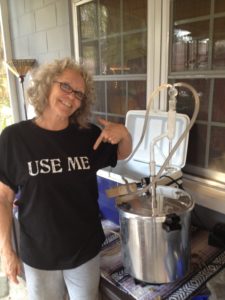
Use Me
A few years ago, I attended a concert featuring one of my favorite musicians, David Bromberg. After a 14-year break from performing (during which time he repaired violins and never actually stopped playing music because friends would not leave him alone!), he said, “Why not go on the road again?”
He invited all of his friends to write and record songs with him on his album. He wanted to be used! So the title of this album is “Use Me.” (I was lucky to see him again this year at a house concert—less than 10 feet away from this man who I listened to most of my adult life. Check that off the bucket list!)
I told Nyssa that’s what I wanted, to be used—in the best possible way, of course! I do not want to die with an “unused” life.
Some of the students who were lucky enough to come to my office for classes know that I call the back room the Atlantic Aromatic Library. Many more stories have come from that room as well.
I want to share those stories, share movies from trips to France and Australia, talk about the Purdue classes I took with my colleagues, share historical tidbits from 40 years of following my bliss—that irresistible calling—into the world of aromatics.
What Do You Want to Know?
In addition, I want to tell you what I use, why I use these things, and how I did things when I was getting started, so I can inspire the next generation. I want to capture special times and moments before I forget, talk about the people on my journey that inspired in me, who they were and still are, and tell my story for the next generation to learn from.
So, with all that being said, I am also asking for your advice. How can what I have to share serve you? What do you want to know? How would you like to use my knowledge? Let us know in the comments.
I’m not going to die an unlived life, but I also don’t want to go out before my life’s knowledge and wisdom is put down on paper (or screen), so that I can share with all of you and feel all used up!
Here is a profile for Patchouli, to follow along with on the video or to read on your own.
Patchouli Exploration
Common name: Patchouli Botanical name: Pogostemon cablin
Part of the Labiatae family, Patchouli is a hardy, leafy plant. It is perennial, and it originates in Indonesia and the Philippines. Most of the world-production of Patchouli is from North Sumatra. The plant prefers warm, moist, well-drained conditions.
The leaves and flowers of the Patchouli plant are picked and soaked in water before distillation. Unlike other plants that are quickly distilled, Patchouli must first be fermented, and then it has a long distillation process. Eucalyptus and Lavender may take about an hour to distill, whereas Patchouli takes approximately six to 24 hours. Quite the difference!
Chemically, Patchouli is made up of lots of little components. The dominant molecule family is sesquiterpenes alcohols, with up to 45% sesquiterpene alcohols present in the oil. The sesquiterpenes are what make the oil have the soothing, calming, anti-inflammatory properties we all enjoy.
Patchouli is an antidepressant and anti-inflammatory. It is also antimicrobial and antibacterial, and it can help with things such as staph and strep. It is also great for the skin, as it helps regenerate skin cells, and it is especially good for older tissue. Patchouli can help with things like acne, scars, and wrinkles.
Like a fine wine, Patchouli ages well. The odor is rich, intense, earthy, and woody—a result of the Patchouli alcohol. In perfumery, Patchouli is often a part of chypre (characterized by citrus, cistus, and oakmoss notes) fragrances.
You can see the variety of Patchouli’s color in this video. Indonesian is dark and rich, almost like syrup. The Indian CO2 select is light and golden. The last sample (country of origin unknown) is very light in color, showing just how much variety can exist.
Tell us what you learned! How do you like to use Patchouli? Is it on your list of favorite also?
We hope you enjoyed the sneak-peak of our Patchouli exploration!
Everyone always wants to know why we have yet to put our programs online, allowing more students to study with us. We always say it’s because we have way too much fun in class.
(We do have a secret plan in place to bring the Atlantic Institute to you … Have you heard about the Atlantic Aromatic Library?)
We enjoy aromatherapy so much that we created a series of classes where beginning students can journey with us as we study oils and the healing process—all the while making wonderful-smelling goodies to use at home.
Last year was the first year we offered the Aromatherapy Beginner’s Course and Training, created by Linda Byington and myself. Since we have so much fun together, I asked Sylla to attend. Believe it or not, she walked away with some surprising insights.
Sylla’s Insights
Here, Sylla shares about her experience. Though it is personal, it is also universal. Watch and find out:
How the synergistic energy of a group helped her identify how to better her health
What three oils helped her to complete the final stages of a project
Her new favorite self-care tool (NOT aromatherapy) and why she’s so excited about it!
There’s also a slightly embarrassing mother-daughter moment at the end. One of the many joys of running a family business!
Let us know what your go-to tools are for self-care these days and leave a comment. We love inspiring greater health in our community, virtual or in-person. We all live on this beautiful planet together, so let’s do so harmoniously, both inside and out.


 I’ve been an aromatherapy educator since the early 1970s. Since then, the field has undergone many changes. With the introduction of the Internet and multi-level-marketing companies, I’ve seen both good and bad information circulate rapidly.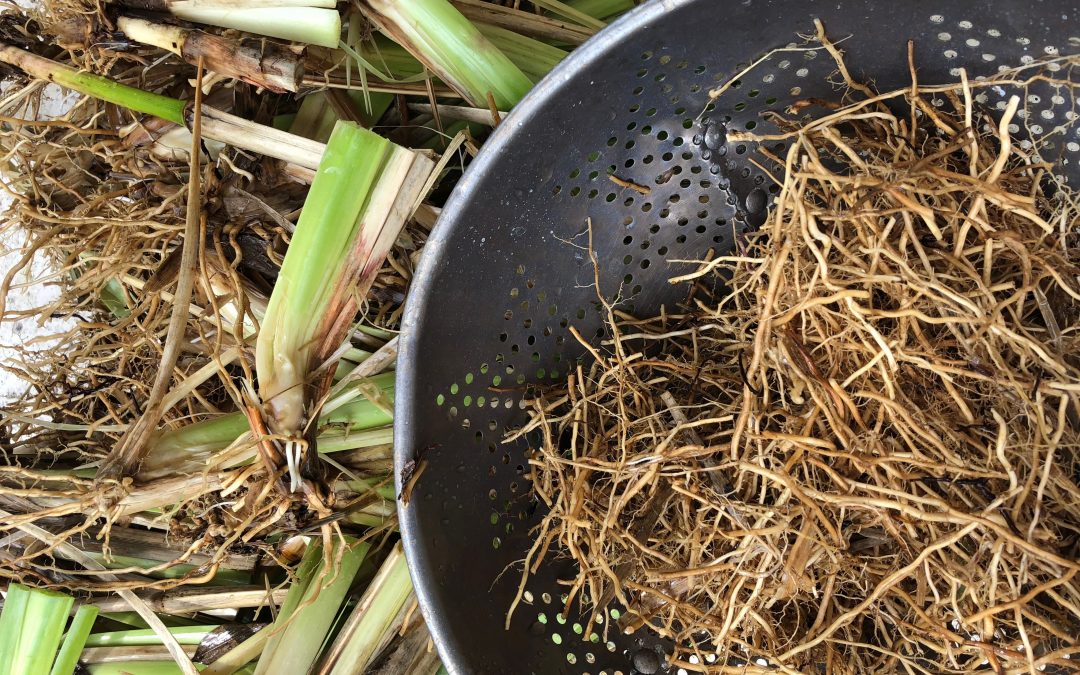



 .
. A few years ago, I attended a concert featuring one of my favorite musicians, David Bromberg. After a 14-year break from performing (during which time he repaired violins and never actually stopped playing music because friends would not leave him alone!), he said, “Why not go on the road again?”
 .” (I was lucky to see him again this year at a house concert—less than 10 feet away from this man who I listened to most of my adult life. Check that off the bucket list!)
Recent Comments